Title: Effect of simulated space radiation on the activity and lipid profile of haloarchaea entrapped in salt crystals
Supervisors and Laboratories:
Adrienne Kish, MCAM, Muséum National d’Histoire Naturelle
Arnaud Huguet, METIS, Sorbonne University Project
Description:
Salts such as halite (NaCl) are known to harbor microbial cells, including those of haloarchaea. The survival duration of such microorganisms is currently a subject of much debate, as few appropriate methods have been available to address the key scientific questions involved. Over the past years, my lab has developed a range of methods for studying the molecular adaptations of halophiles in saturated salts through proteomics, protein biochemistry and biophysics, as well as microbiology and cell imaging. In collaboration with Arnaud Huguet (Sorbonne University) we have developed methods for extraction and GC-MS analysis of lipids from halophiles entrapped in halite.
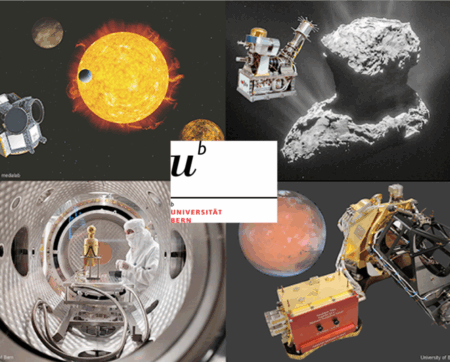
The survival of halophilic microorganisms and the preservation of the molecular remains of dead cells in hypersaline conditions are also questions of interest in astrobiology. High-salt environments are common in the solar system, from Mars to the icy moons of Jupiter and Saturn, to asteroids. Space environments include exposure to types of solar radiation against which the Earth’s atmosphere and magnetosphere shield life on Earth. As collaborators in the Exocube spaceflight experiment destined for the exterior of the International Space Station in late 2027, we are contributing samples of haloarchaea entrapped in halite to be exposed to UV radiation in low Earth orbit. Final preparations require additional microbiology, cell imaging, lipid extraction, and UV-exposure tests to determine the effects of both salt entrapment and UV irradiation the model haloarchaeon Halobacterium salinarum.
Project Methodology and Objectives: This M2 project is at the interface of microbiology, cell imaging, and organic chemistry:
• haloarchaea microbiology (culturing at various salinity levels, halite entrapment of microorganisms) • exposure to simulated space UV radia6on (UV exposure, survival curves/metabolic ac6vity measurements with fluorescent markers using a microplate reader)
• lipid analyses after halite entrapment, UV exposure (lipid extraction, GC-MS)
Previous Publications from the Lab Related to the Topic:
- Ravaro E, Burr DJ, Marques XX, Elsaesser A, Kish A. 2026. Fluorescent probes as markers of cell envelope structure and func6tin in halophilic archaea. bioRxiv heps://doi.org/10.64898/2026.02.20.706996 (in review for Sci Rep)
- Bourmancé L, Brûlé S, Raynal B, Kish A. (2025) Assessment of methods for evaluating structural stability of cell envelope fragments in hypersaline brines as biosignatures of ancient microbial life. Sci Rep. 15:28677
- Bourmancé L, Foucher F, Canizarès A, Kish A. (2025) Detectiong carotenoids in salt crystals: Insights into biosignature detection under Mars-like proton irradia6on using in situ and ex sit Raman spectroscopy. Int J Astrobiol. 24, e20
- Bourmancé L, Marie A, Puppo R, Brûlé S, Schaeffer P, Toupet M, Nitsche R, Elsaesser A, Kish A. (2025) The salty tango of brine composition and UV photochemistry effects on Halobacterium salinarum cell envelope biosignature preserva6on. Commun Biol 8:602
- Favreau C, Tribondeau A, Marugan M, Guyot F, Alpha-Bazin B, Marie A, Puppo R, Dufour T, Huguet A, Zirah S and Kish A (2022) Molecular acclimation of Halobacterium salinarum to halite brine inclusions. Front. Microbiol. 13:1075274. doi: 10.3389/fmicb.2022.1075274
Potential PhD: Possibility to be presented to the doctoral school « concours »
Applications: The application period is currently open, and will continue until a candidate is selected. To apply, send a CV noting any previous laboratory experience (internships), Master 1 classes and grades (if available), and a letter of motivation to Adrienne Kish (adrienne.kish@mnhn.fr)